High image quality
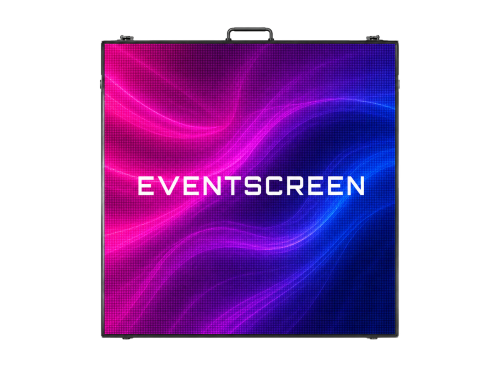
LED screens with P2 technology and high refresh rates — ready for live events, cameras, and TV-quality recordings.
Offer
LED Screens
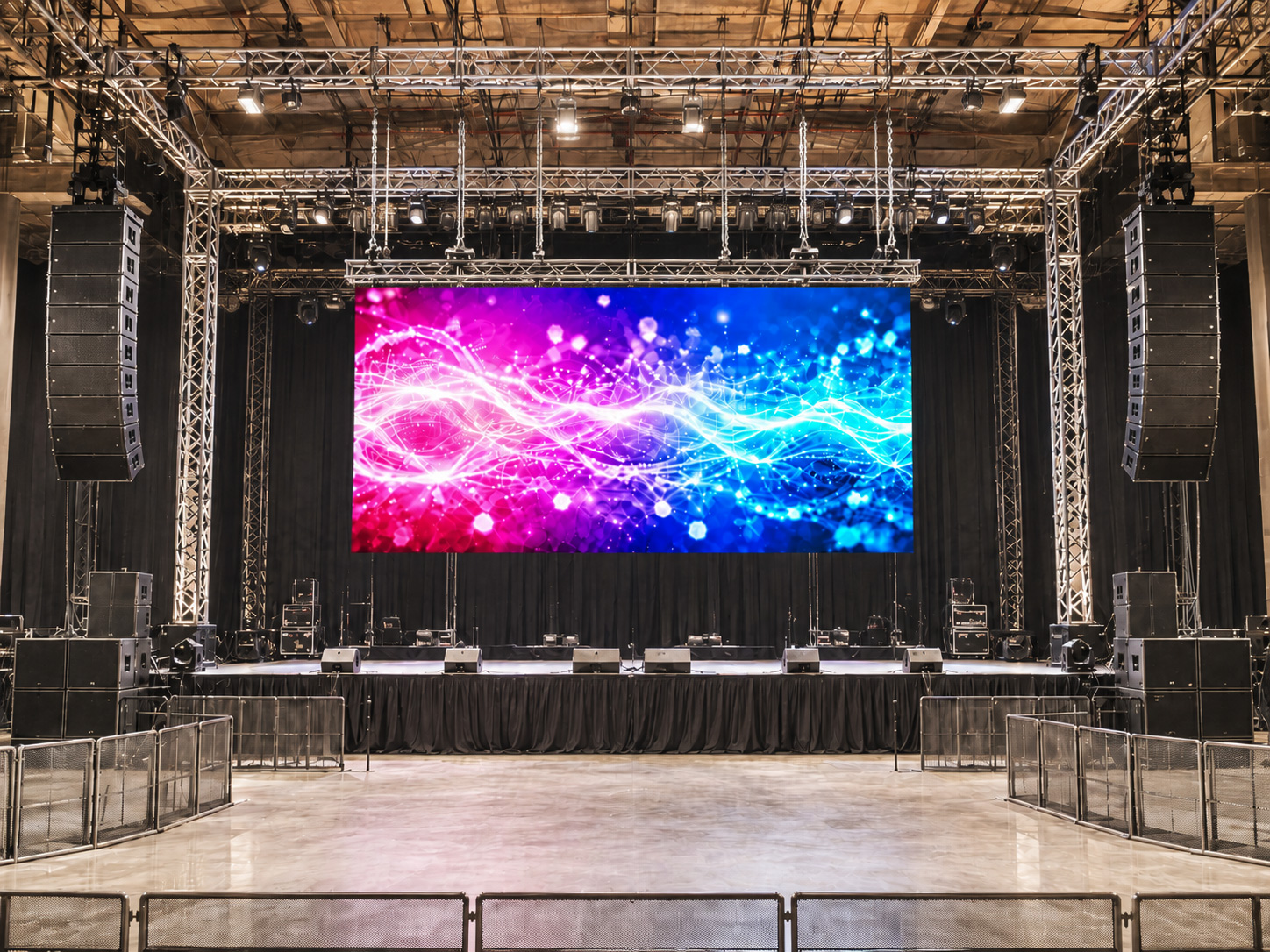
We offer a professional LED screen and display rental service, ideal for brand promotion, events, and all types of live productions. We specialise in supplying high-quality LED screens suited for streaming, video post-production, filming, and visual storytelling.
Renting an LED screen lets you easily reach a wide audience and communicate information in an eye-catching way. LED screens are visible from a distance and in various lighting conditions, making them effective both outdoors and indoors.
Rental includes installation, dismantling, and full technical support. Our team of experienced specialists will provide professional help at every stage so your event is a success.
If you also need support with video streaming, post-production, filming, or creating visualisations, our experts can help in all these areas. We have modern equipment and tools that let you produce high-quality video content that captivates audiences.
Whether you are organising a conference, sports event, concert, trade fair, or product presentation — our LED screen rental service will help you communicate effectively and create an unforgettable experience for your audience.
Why EventScreen
LED screens with P2 technology and high refresh rates — ready for live events, cameras, and TV-quality recordings.
Installation, dismantling, vision production, streaming, screen graphics, and video post-production in one team.
We offer flexible options tailored to your needs.
From a single-day rental to a long-term contract. Contact us for details and an attractive quote.
Discover how LED screens can strengthen your event and make it more compelling.
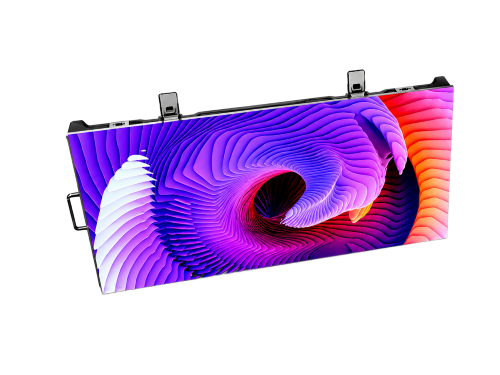
LED Screens
Indoor and outdoor LED screens are a key element of effective communication at events, exhibitions, and brand presentations.
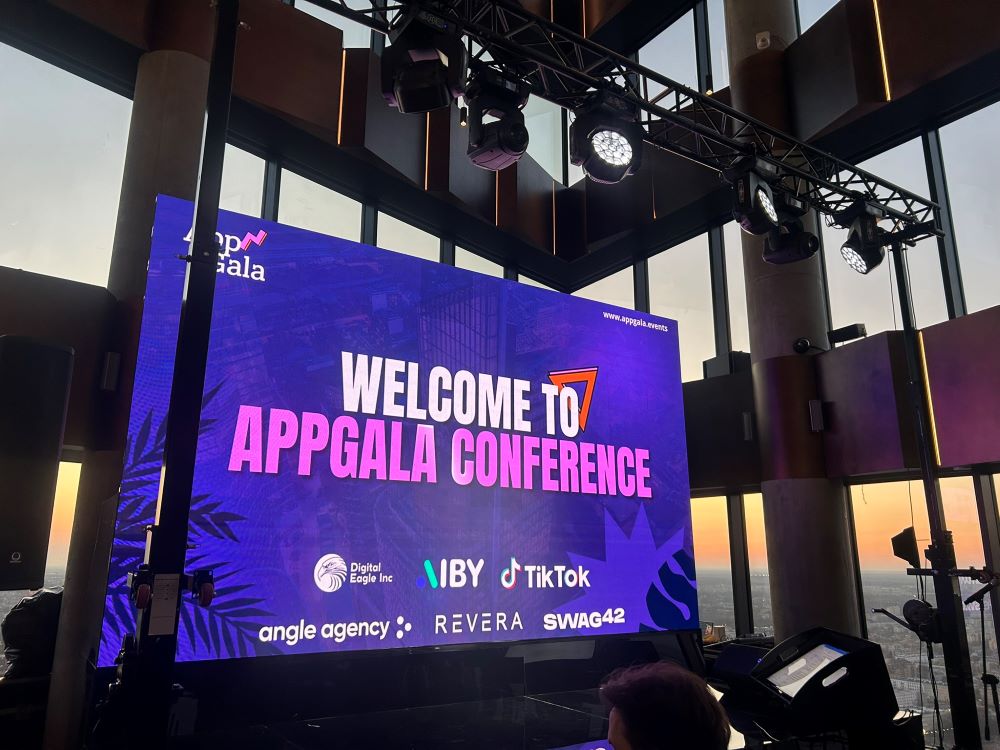
Indoor LED screens are ideal for attracting attention inside buildings — conference halls, hotels, shopping centres, and trade fair stands.
View details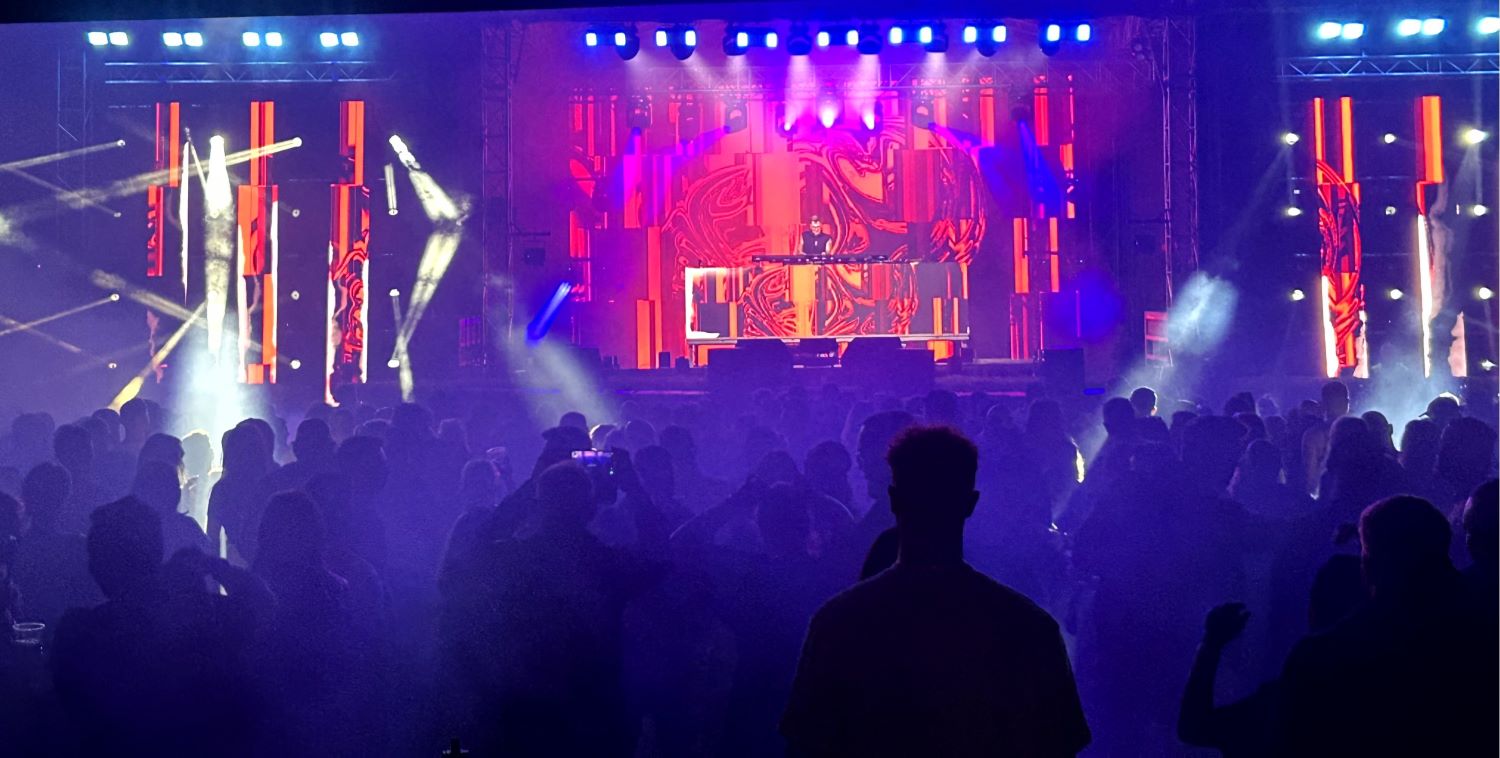
Outdoor LED screens let you reach a wide audience and promote your brand in open spaces.
View detailsNot sure which LED screen is right for your needs?
Call: +48 508 791 501Specifications
Choosing the right LED screen parameters affects image quality, visibility, and reliability during the event. Learn about the key aspects to consider.
Excellent visibility even in bright daylight.
Sharpness and detail at the highest level.
Readable image from any viewing position.
Stable operation in all conditions.
Konfigurator ekranu
Dobierz ekran LED do swojego wydarzenia
Skorzystaj z konfiguratora i szybko sprawdź orientacyjny rozmiar, proporcje oraz powierzchnię telebimu dopasowaną do miejsca realizacji.
Applications
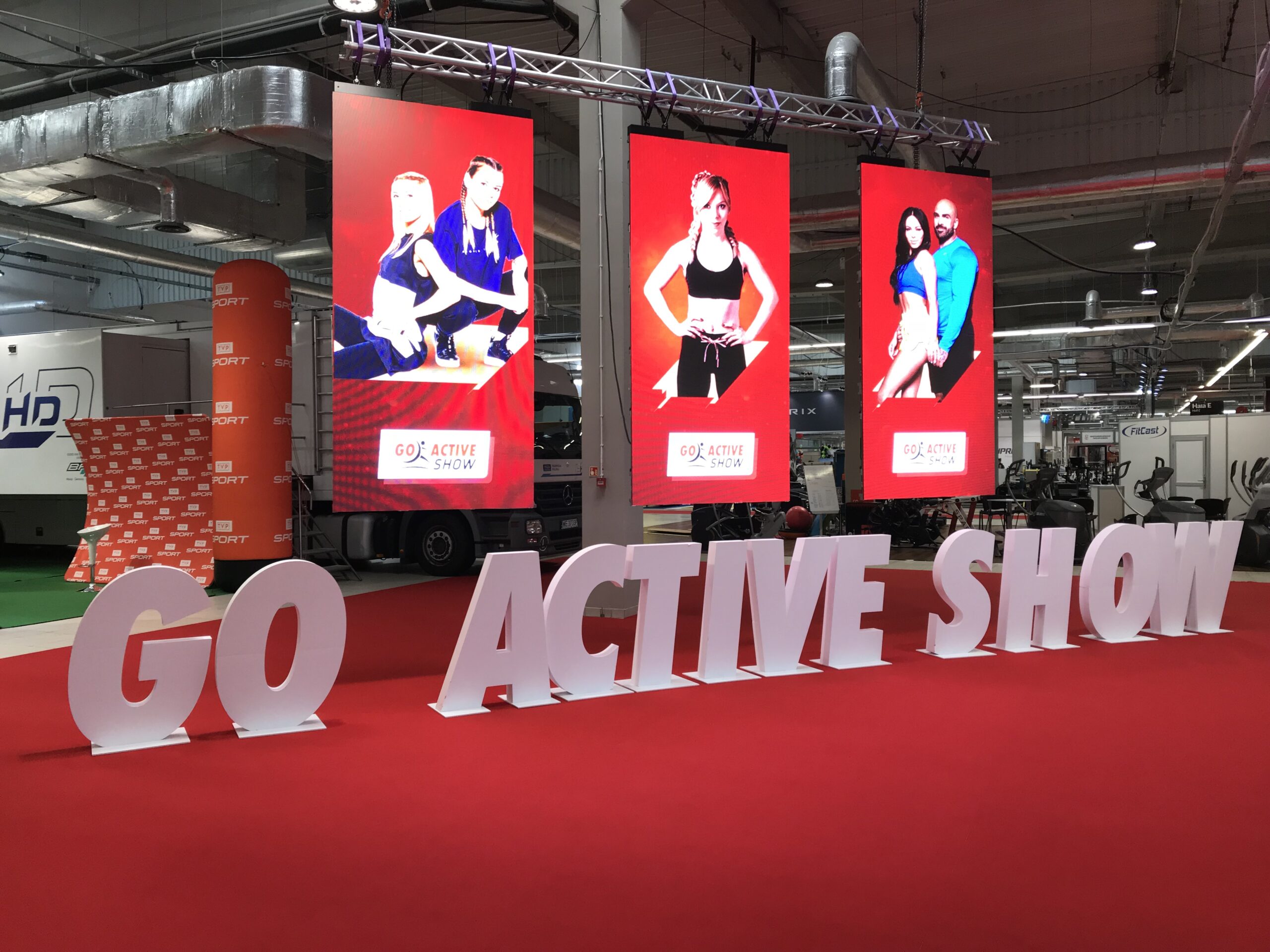
LED screens at trade fair stands attract visitors and increase the effectiveness of brand presence. We provide high image quality, comprehensive integration into the stand, and technical support. We also offer video recording and live internet streaming.
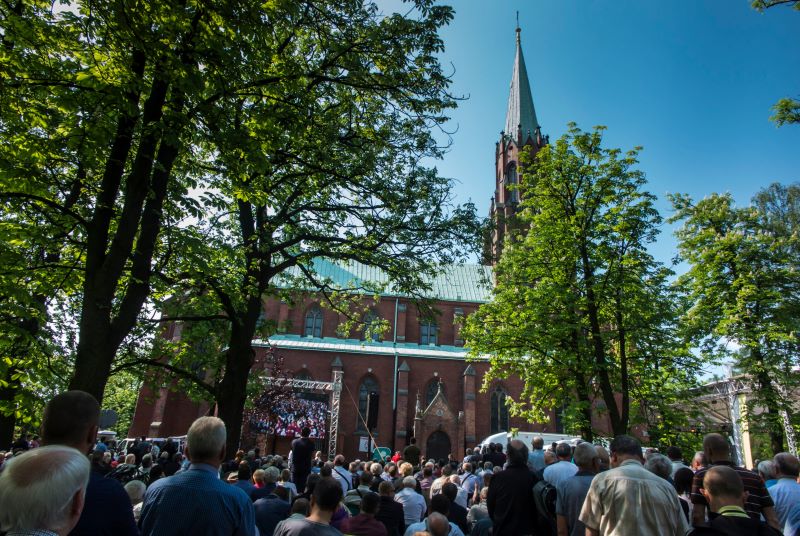
Add a special touch to any ceremony! Our screens display content, photos, and video to create an unforgettable experience and bring the message closer to the audience.
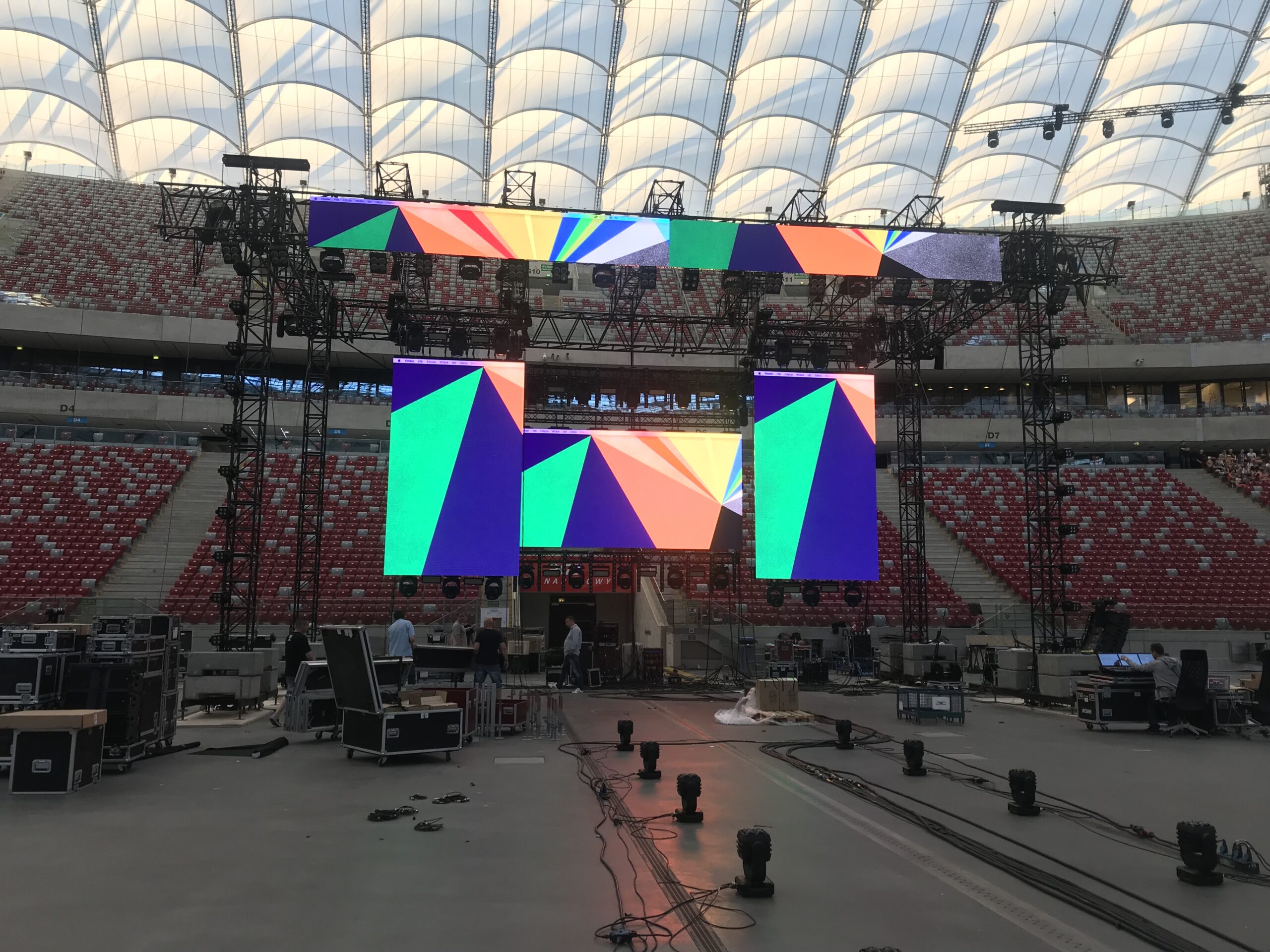
Take the excitement to the next level! Our screens display scores, replays, and animations that engage fans throughout the stadium and create an electric atmosphere.
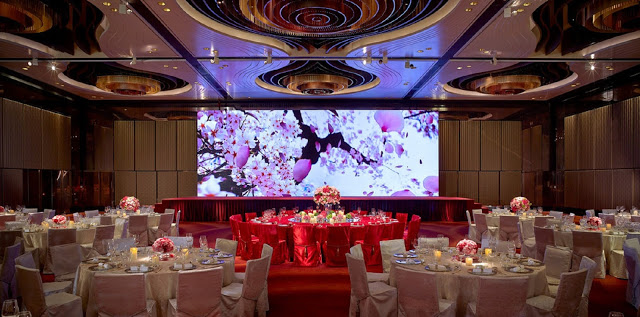
Add magic and unforgettable moments to your wedding! Our screens display photos, films, and dedications to create a wonderful atmosphere and give guests a unique experience.
Wsparcie wydarzenia
Gallery
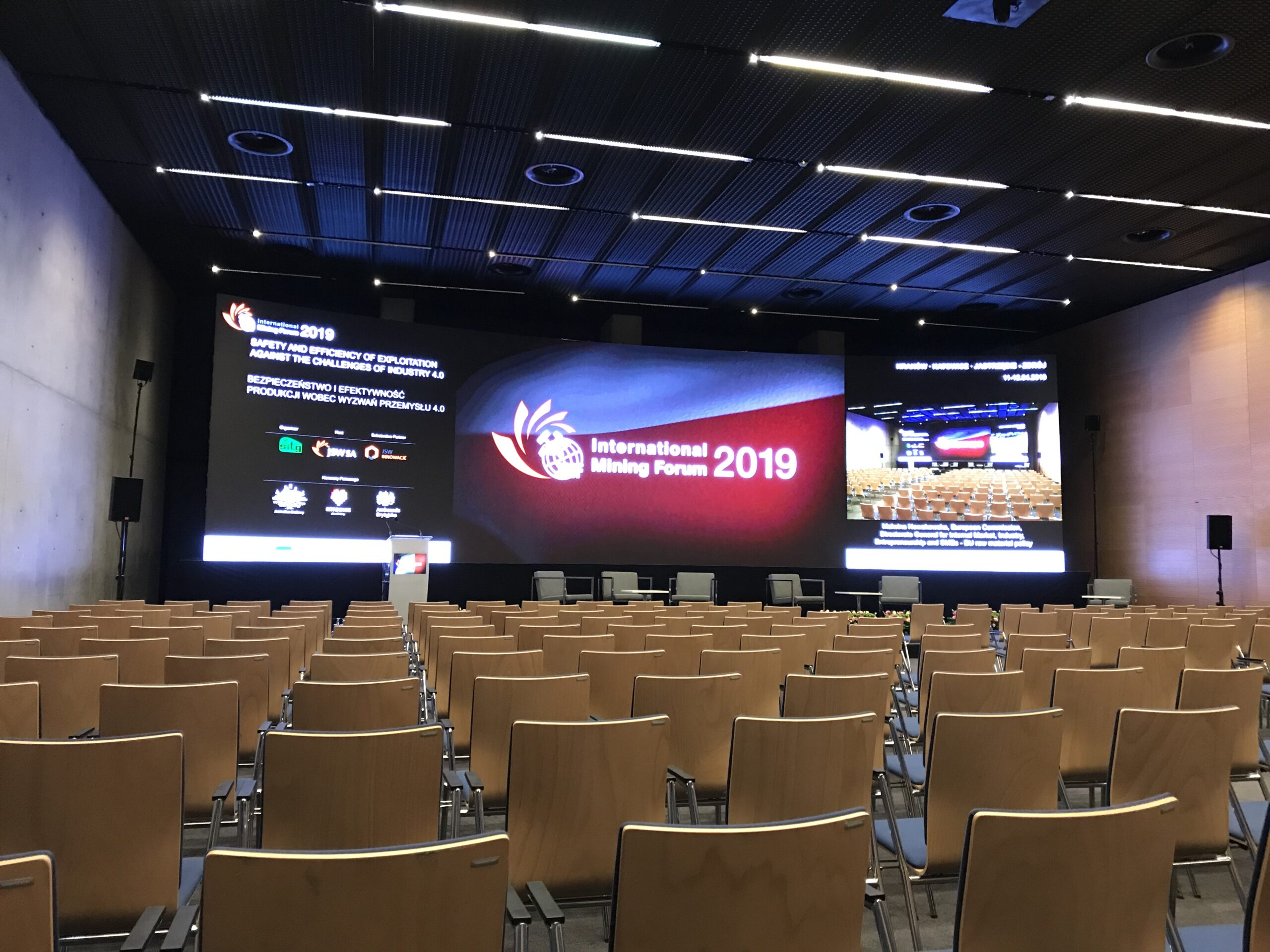
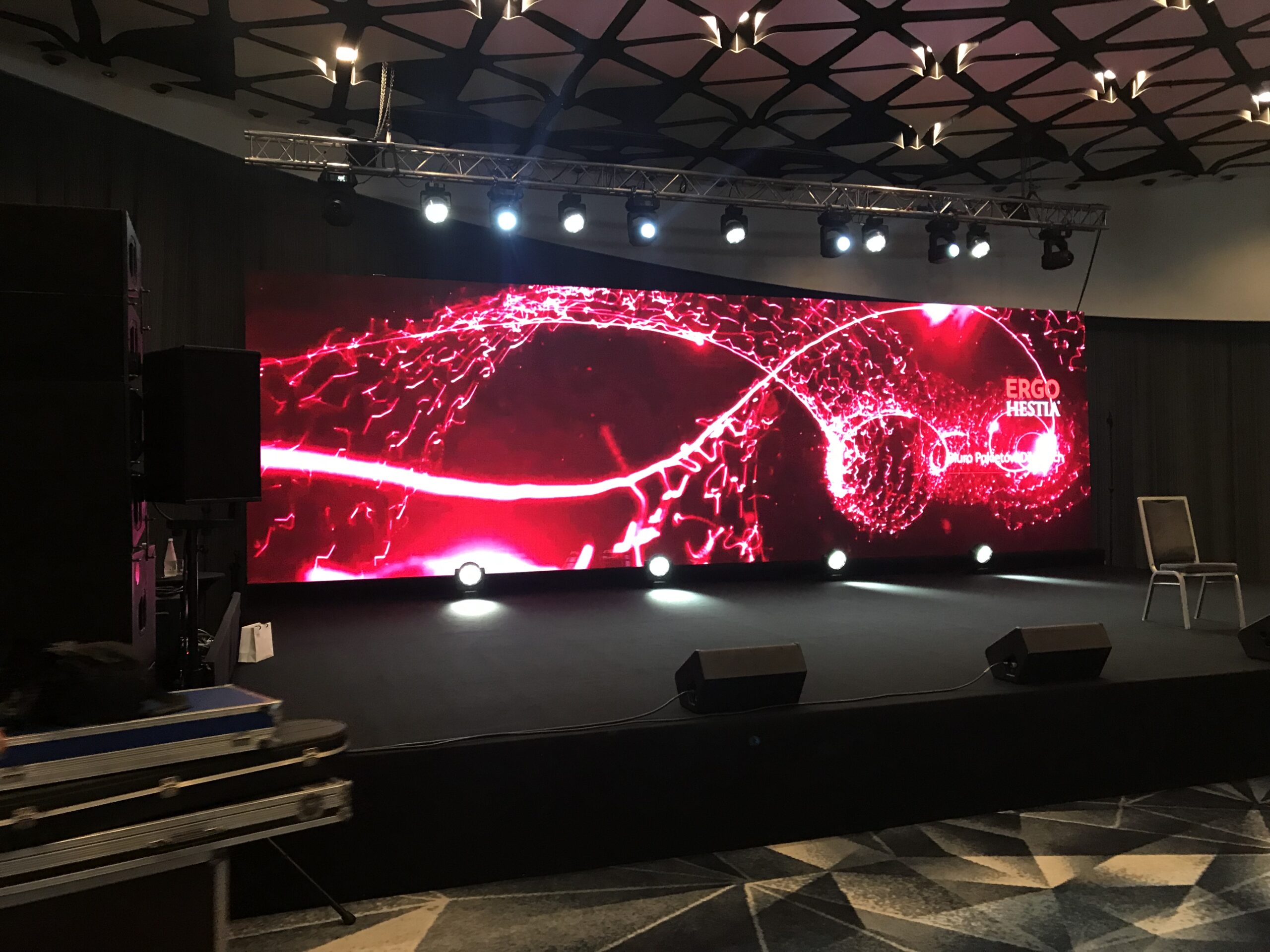
See examples of LED screens at concerts, conferences, trade fairs, and open-air events.
FAQ
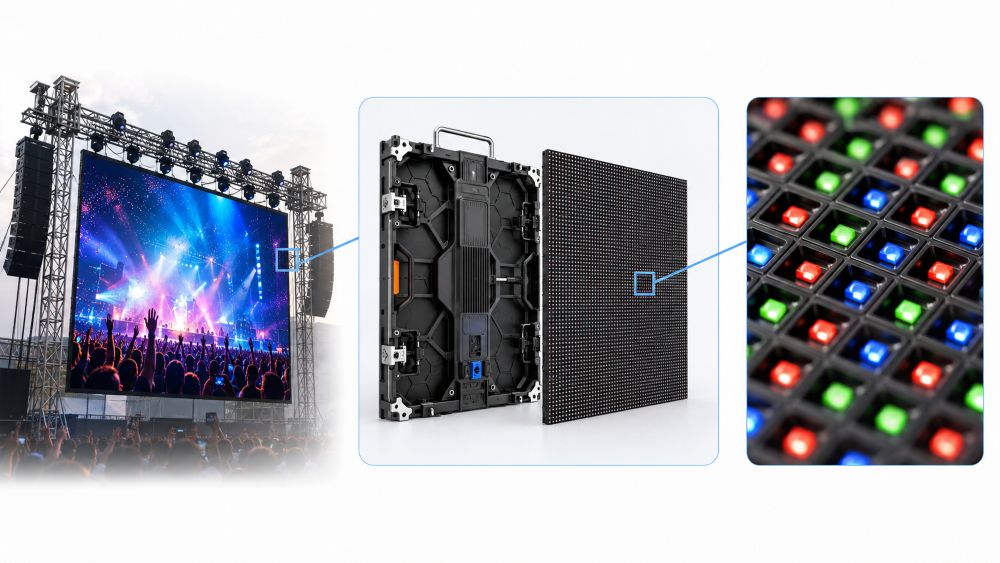
LED screens, also known as LED walls or telebims, are large video displays made from many LED (light-emitting diode) modules. An LED is a semiconductor that emits visible light when electrical current passes through it.
LED screens use thousands or millions of LEDs arranged closely together to form a pixel matrix. Each pixel consists of three LEDs — red, green, and blue (RGB) — which can generate a wide range of colours. This allows LED screens to deliver high image quality and vivid colours.
LED screens are frequently used outdoors, in stadiums, shopping centres, and at events to display video content, advertising, information, and live broadcasts.
Power consumption depends on the screen size, technology, brightness, and configuration. Large high-resolution LED screens generally require more energy.
Standard multi-metre LED screens can consume anywhere from several hundred watts to tens of kilowatts. The power required for additional equipment also needs to be considered.
For rentals or installations, we specify the power requirements in detail. Before an event we recommend consulting with our specialists to ensure the correct power supply for the venue and operating conditions.
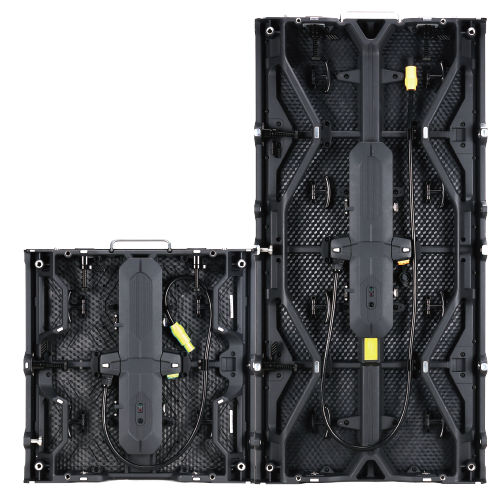
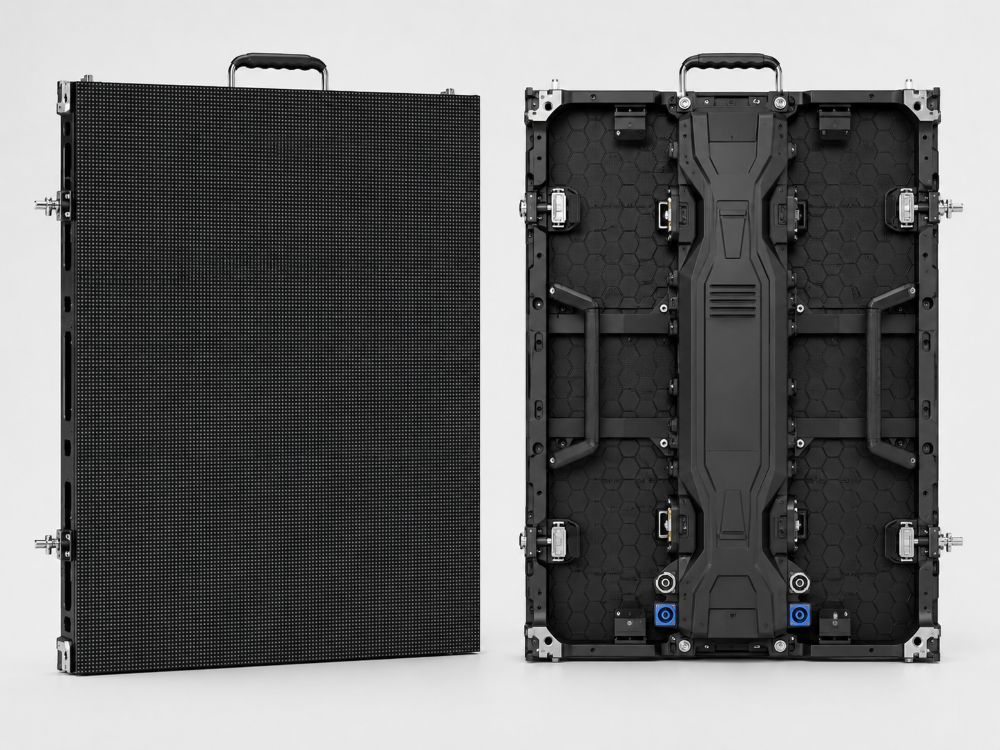
An LED cabinet is a single structural module used to build a larger LED screen. In practice it is a housing containing LED modules, power supply, control electronics, and locking elements that allow adjacent cabinets to be connected into a larger screen surface.
Thanks to cabinets, LED screens can be assembled in various sizes and formats, adapted to a stage, trade fair stand, conference room, or outdoor event. Cabinet quality affects structural stability, assembly speed, safety, and the overall aesthetics of the LED screen.
Recording quality depends on several factors. For high-brightness LED screens used outdoors, camera recording can be challenging.
Screen brightness can affect camera exposure, potentially causing loss of detail in recorded images. It is therefore important to choose appropriate exposure and white balance settings on the camera.
A high refresh rate is particularly important: if the screen refresh rate is low, visible flicker may appear in recordings. For professional recordings we adjust the screen's technical parameters before the event.
Screen sizes vary depending on needs and application, but some standard sizes are frequently used.
A typical LED screen can range from several metres wide and high to more than ten metres in each dimension. Matching the screen size to the specific location and client needs is important, taking into account the available space, viewing distance, and budget.