info@eventscreen.eu 508 791 501

Configurator

LED screen rental configurator

Select the basic LED screen parameters, installation method and additional services. At the end you will receive a clear configuration summary and a ready inquiry to send.

1 Choose screen
2 Choose application
3 Additional services
4 Summary
LED screen configuration preview
Quick presets:
1. Screen size
m
m
Aspect ratio
2. Screen type and installation
Installation method
3. Additional services

Step 2 of 2

Send an inquiry in one click

Copy the ready inquiry text and paste it into your email. We will respond with a matched offer and production details.

Inquiry text to copy

Generating...
1Copy

Copy the ready inquiry text with one click.

2Paste into email

Paste the content into a new email message.

3Send it to us

Send the inquiry and we will respond with a matched offer.

Installation

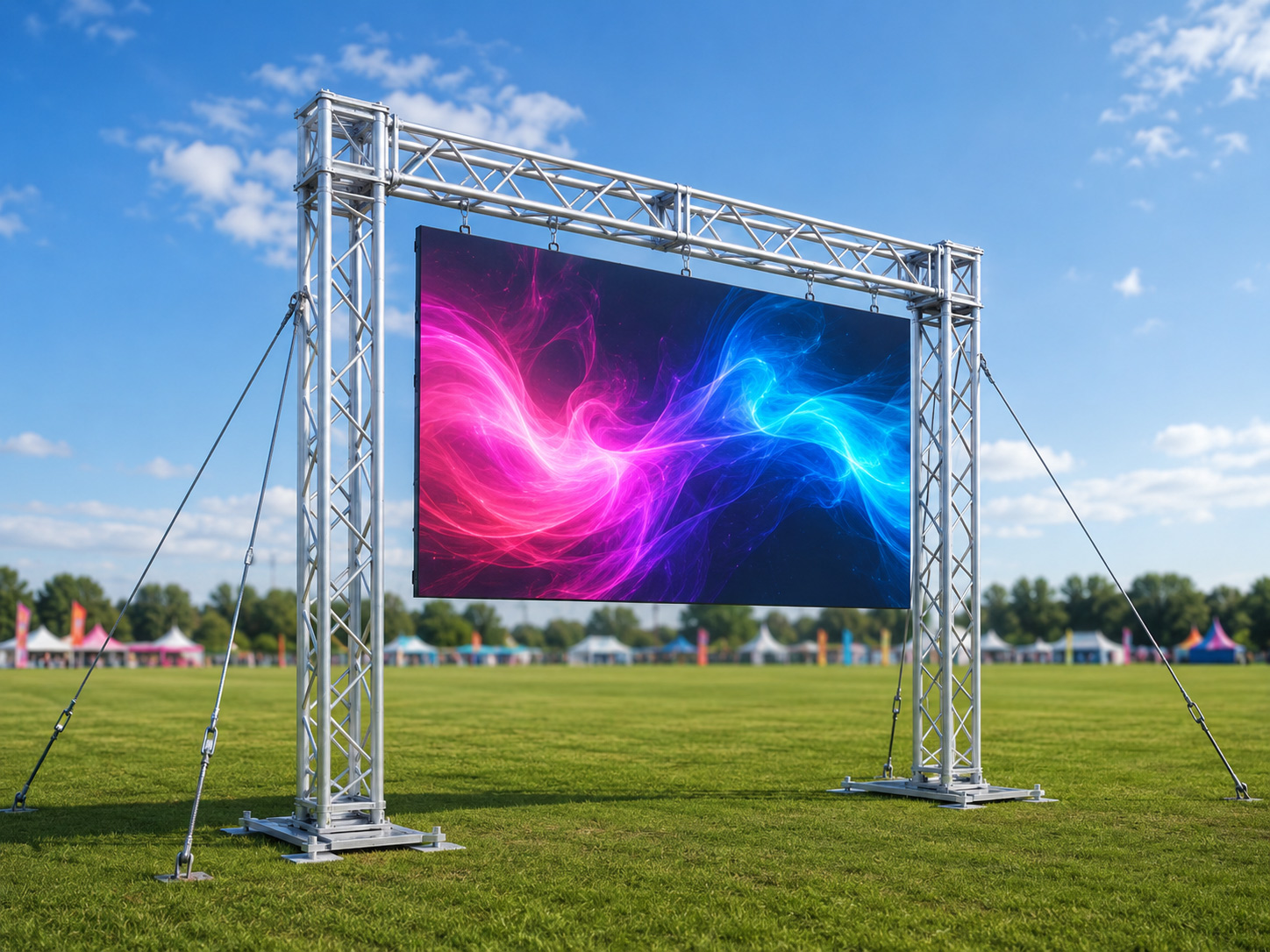
Truss gate

A truss gate is a freestanding, foldable aluminium structure made of two vertical truss posts connected by a top beam. The LED screen is mounted between the posts without anchoring into the ground or using permanent infrastructure. It is used mainly outdoors: at festivals, trade shows, near buildings and in open areas.

The gate height is adjustable, so the screen can be placed at the best viewing level for the audience. In stronger wind, the structure is secured with guy lines anchored to the ground. The post spacing is selected individually for the screen width.

  • Foldable and transportable aluminium structure
  • Adjustable screen suspension height
  • Designed for outdoor use
  • Guy-line stabilisation in windy conditions
LED screen on a truss gate - outdoor installation
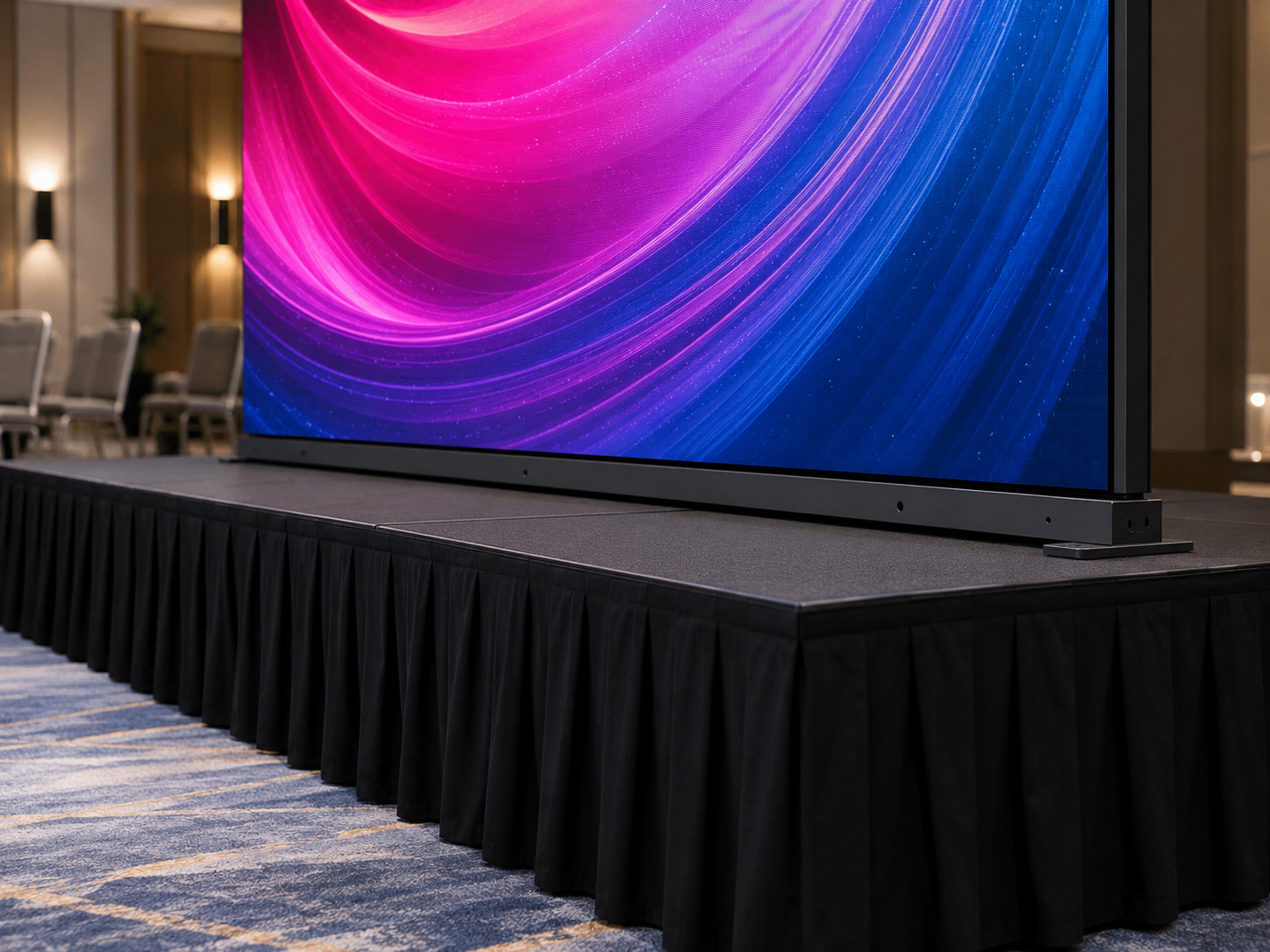
LED screen on stage platforms - indoor installation

Installation

Stage platforms

In this configuration, the LED screen stands on dedicated stage platforms that set the screen height above the floor. This solution is most often used indoors at conferences, galas, trade shows and corporate events where the screen must be visible across the room without being hung from the ceiling.

The platforms neatly mask the support structure. We can cover them with fabric in a colour matched to the event identity. Available heights range from 40 cm to 1.5 m and are selected for the audience distance and room layout.

  • Ideal for halls, conference rooms and event stages
  • Clean fabric masking of the support structure
  • Adjustable height: 40 cm - 1.5 m
  • Fast installation and dismantling without venue interference

Installation

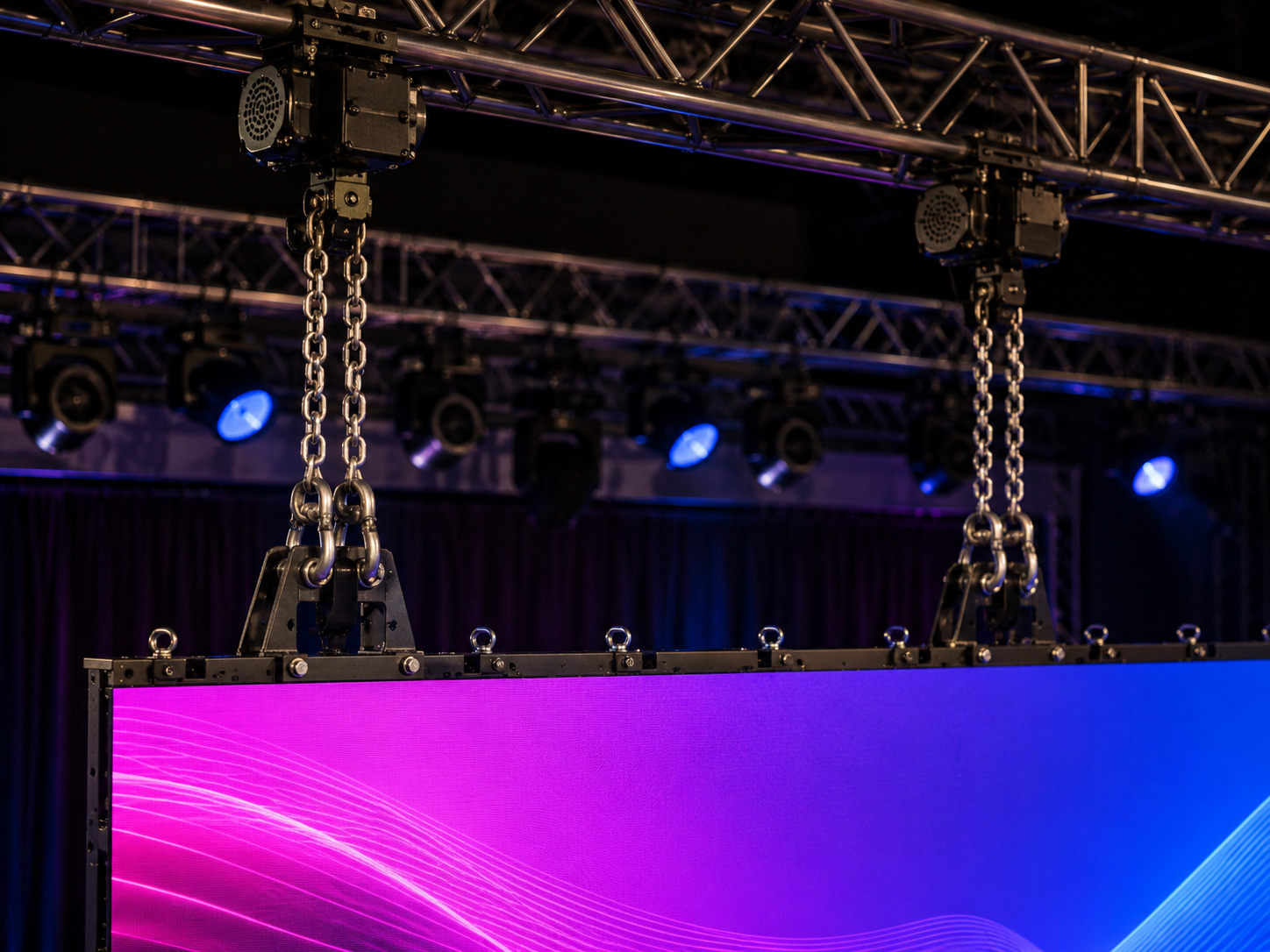
Suspension on hoists

The screen is mounted directly to the upper truss beam using chain hoists. This gives maximum positioning flexibility: the LED screen can hang at the required height and be levelled precisely. This solution is used on large stages, in sports halls and congress venues.

Suspension integrates the screen visually into the stage space without placing additional structures on the floor. Before production, the load capacity of rigging points must be verified. If your stage already has truss installed, contact us and we will check the suspension options.

  • No floor-standing structure, leaving the stage space clear
  • Height adjustment with chain hoists
  • Truss or ceiling load capacity must be verified
  • Ideal for venues with existing rigging infrastructure
LED screen suspended from truss on hoists

LED screen - how to choose the right display?

An LED screen is a large-format display used for image, video and multimedia content during mass events, congresses, festivals and corporate events. Outdoor LED screens offer high brightness, strong visibility even in sunlight and long module life. A custom LED screen can be built in many sizes, from compact walls to large stage installations.

Selecting the right parameters is a key stage of every production. Height, width and aspect ratio must match the audience distance, venue size and content type. A screen for a smaller corporate event is designed differently than a screen for a large outdoor festival.

Our configurator helps you quickly define initial LED screen parameters. After choosing the values, you can generate a ready inquiry. Our team will respond with a recommended solution that includes logistics, installation and technical support.
FAQ

Questions and answers

1. Is an LED screen built from a single module?

No. An LED screen is made of many LED cabinets connected on site. Standard modules are usually 500x500 mm or 500x1000 mm. Thanks to the modular structure, we can build screens in almost any size, from a few square metres to large video walls covering an entire stage.

2. How much does an LED screen weigh?

Weight depends on the screen model and size. Typically, one square metre of LED wall weighs 20-35 kg. A 5x3 m screen (15 m2) weighs about 300-525 kg including structure. For suspended installations, the load capacity of the truss or rigging points must be checked in advance.

3. Is an LED screen resistant to rain?

Outdoor LED screens have an IP65 rating, which means full protection against dust and water jets. They can operate during rain. Indoor LED screens have a lower IP rating and should not be exposed to direct moisture.

4. Does an LED screen consume a lot of power?

Typical consumption is 400-800 W per m2 at full brightness. A 5x3 m screen may require 6-12 kW. In practice, with standard content and adjusted brightness, consumption is usually 30-50% lower. For each project we provide power documentation for planning the electrical supply.

5. How long does LED screen installation take?

A 3x2 m screen on a truss gate or platforms usually takes 2-4 hours. Suspended installations of 10-20 m2 usually take 6-10 hours. The timeline depends on site preparation, power distribution and controller setup. We always agree the schedule in advance.

6. How long does dismantling take?

Dismantling usually takes 30-40% less time than installation. A 3x2 m screen takes around 1.5-2 hours, while larger setups take 3-5 hours. We set the exact dismantling schedule before the project to fit the venue time window.

7. What do 2K, 3K and 4K mean for LED screens?

2K, 3K and 4K describe approximate horizontal resolution: about 2048, 3072 and 3840 pixels. In LED screens, resolution depends directly on pixel pitch and screen dimensions. The smaller the pitch and the larger the screen, the higher the resolution. The configurator estimates screen parameters based on the selected size and screen type.